Hair loss:disease
Average hair loss is about 30-100 a day.this is normal
One should test the actual loss so that they know whether they suffer from alopecia .
Comb the hair for 4 days in the morning i.e a day before washing the hair, day on the washing and 2 consecutive days then count the number of fallen each day and add them.
If the average comes to 100/day ,it’s not hair falling disease
Did you Know?
Alopecia areata is known as a “polygenic disease.” This means that, unlike a single-gene disease, both parents must contribute a number of specific genes in order for a child to develop it. Because of this, most parents will not pass alopecia areata along to their children. With identical twins — who share all of the same genes — there’s only a 55% chance that if one has alopecia areata, the other will, too. This is why scientists believe that it takes more than just genetics to cause the disease and that other environmental factors also contribute to people developing alopecia areata.
How is alopecia causes?
Androgenetic alopecia
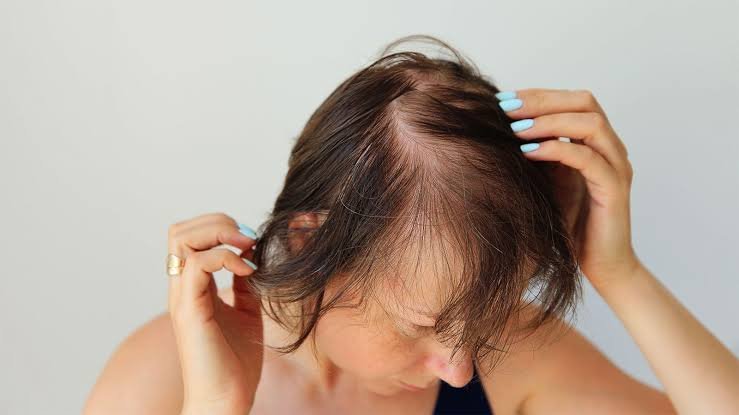
Androgenetic alopecia is the name for both male pattern hair loss and female pattern hair loss. It usually runs in families. It is caused by the effects of androgens (male hormones) on your hair follicles. Most of the time, hormone levels are normal.
Alopecia areata
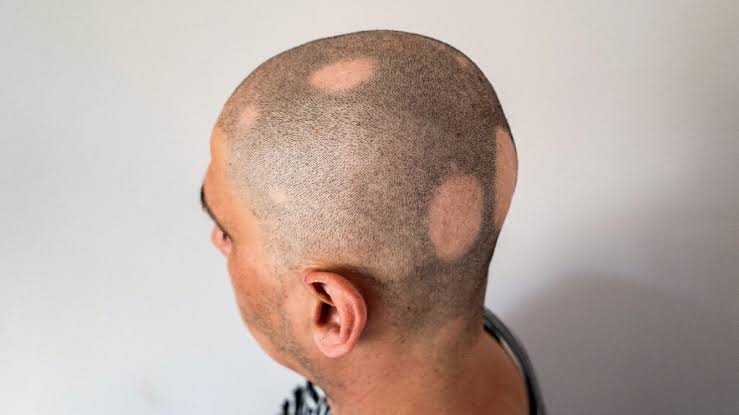
Alopecia areata is an autoimmune disease that occurs when your immune system attacks your hair follicles. No one knows for sure what causes this, but it’s probably triggered by a combination of genetics and environmental factors. In some people, it might be triggered by extreme stress or anxiety.
Telogen effluvium
Telogen effluvium is where a shock to your body stops your hair growing temporarily. This can continue for a few months, and during this time more of your old hairs fall out than usual. Because it takes time before your new hairs grow, this causes temporary hair loss.
Triggers that can cause this include:
•childbirth
•fever
•surgery or trauma
•stress
•sudden weight loss
•health conditions such as hypothyroidism or lupus
•starting or stopping some medicines
Other causes
Other causes of hair loss include:
•medicines such as cancer treatments
•infections such as tinea
•skin diseases such as psoriasis
•pulling out your hair, which may be due to a mental health condition
•chemicals, bleach, heat from a hair dryer or brushing your hair too much
•traction alopecia — if your hair is under tension in a tight hairstyle
What are the symptoms of alopecia?
Alopecia areata
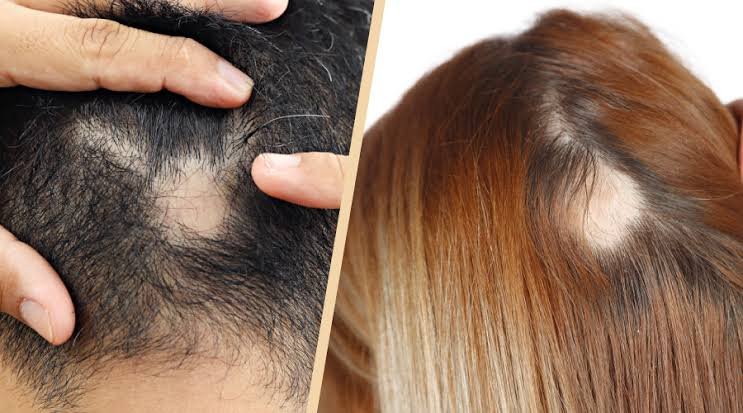
Alopecia areata usually leads to one or more circular patches of hair loss, usually on your head. Bald patches can get bigger quickly. The skin in these patches looks normal. You may have some white or broken hairs in the bald patches.
You may have an itchy or burning feeling in the area, but most people won’t feel any different to usual. You might have tiny pits in your nails.
The hair usually grows back, but it can take several months or even years. Sometimes your hair will fall out again and then grow back again, with alopecia coming and going. In some people, it may never grow back.
Occasionally, alopecia areata can be much more widespread. Alopecia totalis is when all the hair on your head falls out. Alopecia universalis is when all your hair falls out — on your head, face and body. It’s less likely that hair will grow back if there is more extensive hair loss.
Scarring alopecia
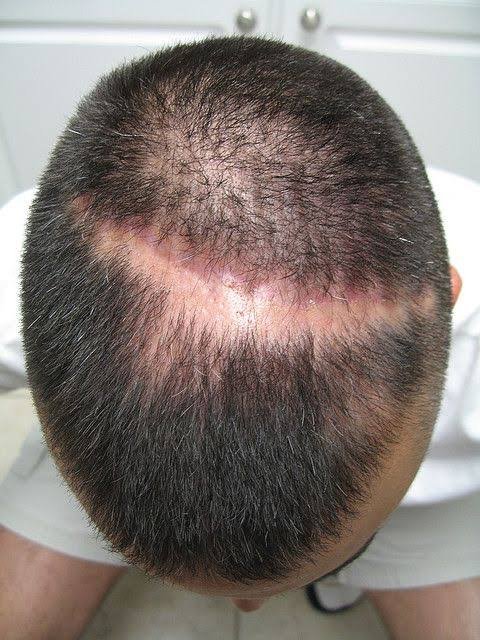
Some health conditions cause alopecia where the skin in the bald patches looks red, swollen, scaly or blistered. If it’s not treated early, it can lead to permanent scarring of the skin.
What can I do to manage my alopecia?
Relief from alopecia depends on the cause of your symptoms and your treatment. Alopecia may go away and then come back. It also may continue, even with treatment. The following may help you manage alopecia:
Avoid hair and scalp trauma. Use a soft-bristled hair brush and wide-toothed comb to protect your scalp from damage. Avoid the overuse of chemicals on your hair. Avoid hairstyles that pull your hair too much.
Eat healthy foods. Hair loss can be caused by poor nutrition. Healthy foods include fruits, vegetables, whole-grain breads, low-fat dairy products, beans, lean meats, and fish. Eat healthy snacks, such as low-fat yogurt, if you get hungry between meals.
Reduce stress. Try to get enough sleep and daily exercise. Learn new ways to relax, such as deep breathing, meditation, and listening to music. These may help you cope with stressful events.
Homeopathic Remedies For Alopecia

Phosphorus
Phosphorus is another homeopathy medicine that is extremely beneficial for enhancing hair growth. It promotes regrowth in those places from where clumps of hair are lost at a time. It is also prescribed for those people who suffer from hair loss due to dandruff and other minor scalp disorders.
Thuja Occidentalis
Thuja is one of the indicated remedy in case of Alopecia areata. Patient usually complains of diffuse hair loss along with dandruff on scalp. Dandruff is generally thick and whitish in color with intolerable itching. Patchy hair loss. Handfull of hair come out while combing or washing hair. Single bald spots progress to form multiple spots. Hence thuja is very good remedy in such cases.
Mezereum:
Sometimes, skin infection like psoriasis and dandruff can lead to hair fall. So, medicine like mezereum can treat this problem and make your hair grow. Regular use of this is a must to see effective and positive results.
Graphites:
If you observe hair falling on sides or patchy baldness on the scalp, then this medicine works the best. Sometimes, too much humidity can also make the scalp itchy and small eruptions occur on the scalp. This results in hair loss. Regular usage of this medicine treats those and put a stop on the hair fall.
Selenium– It is indicated when the hair falls out from eyebrows, beard and genitals. There is great debility in general experienced by the patient which gets worse with heat.
Fluoric Acid:
This hair regrowth medicine in homeopathy is used to treat diseases like Alopecia, brittle hair, vertex baldness, idiopathic hair fall, tangled hair, and so on. It gives a buoyancy to the hair volume and stimulates hair growth
 Dr.Sandhya Jaiswal
Leave a comment